Jan 11, 2010

The American Diet: 34 Gigabytes a Day

New York Times

A report published Wednesday by the University of California, San Diego, calculates that American households collectively consumed 3.6 zettabytes of information in 2008. The paper — entitled “How Much Information?” — explores all forms of American communication and consumption and hopes to create a census of the information we consume.

I’ll be honest: this is the first time I’ve ever used the word zettabyte. I’ve heard of petabytes and even exabytes, but zettabytes are a whole new level of bytes. If a zettabyte is beyond your comprehension, too, it’s essentially one billion trillion bytes: a 1 with 21 zeros at the end. To put that into perspective, one exabyte — which equals 1/1000 of a zettabyte or 1 billion gigabytes — is roughly equivalent to the capacity of 5.1 million computer hard drives, or all the hard drives in Minnesota.

Number of daily words consumedHMI Report/UC San Diego A graph from the report illustrating the dissection of words consumed each day.

So where does all this information we consume come from? Everywhere, it turns out. The report suggests the average American consumes 34 gigabytes of content and 100,000 words of information in a single day. (Leo Tolstoy’s “War and Peace” is only 460,000 words long.) This doesn’t mean we read 100,000 words a day — it means that 100,000 words cross our eyes and ears in a single 24-hour period. That information comes through various channels, including the television, radio, the Web, text messages and video games.

The report also describes our voracious appetite for information and entertainment. In addition to the amount of information we consume, the researchers looked at how much time we devote to each medium. The study suggests that, on average, most Americans consume 11.8 hours of information a day. Most of this time is spent in front of some sort of screen watching TV-related content, taking up a little over four and a half hours of our daily information consumption. Then there’s the computer, which we interact with for about two hours a day. There’s also the phone, radio, music, and print. Most of these experiences happen simultaneously, too, such as talking on the phone while checking our e-mail, or instant messaging while watching TV.

The report also found a huge increase in the number of bytes we consume related to video games. Roger Bohn, professor of technology management and co-author of the study, said, “Gaming saw the biggest leap in the number of bytes we consume and the amount of time devoted to this platform.” This isn’t just first-person shooting games but also includes lots of analytical games like Bookworm, Tetris as well as social networking games.

Bohn also told me, “Print media has declined consistently, but if you add up the amount of time people spend surfing the Web, they are actually reading more than ever.”

Overall, from 1980 to 2008, the number of bytes we consume has increased 6 percent each year, the researchers said, adding up to a 350 percent increase over 28 years. At this rate, it won’t be long before we’re marveling at the next level of bytes: yottabytes.

Funding for the research project came from AT&T, Cisco Systems, I.B.M., Intel, LSI, Oracle and Seagate Technology, with early support from the Alfred P. Sloan Foundation.

Nov 9, 2009

Why Your Brand Needs a Voice on Twitter

At any given moment, there are millions of conversations taking place on the Internet. These discussions are occurring on blogs, within chats, on social networking communities like Facebook, MySpace and LinkedIn, on image and video sharing sites and via micro-blogs like Twitter. Consequently, there is likely a conversation about you and/or your brand. This conversation "about" you is going to happen with or without your participation. Hence you are left with a choice. You can certainly hang back and allow others to shape your image, but if you want to have some part in the process you had better be involved. Twitter is one of the easiest, most effective ways to do this. It's free, it's simple, it's in the moment and there are always people listening and engaging in conversation.

There was a time not very long ago when a sales representative would personally visit each of his or her accounts on a regular basis. There was a shaking of hands, an exchange of personal stories and perhaps even the sharing of a cup of coffee or a meal. For the most part, this is no longer feasible. With travel costs and the ever-widening reach of many businesses, the personal connection has been lost or, at best, is much less frequent. Accordingly, the human touch to doing business has threatened to disappear from the corporate landscape. But with the advent of the Internet, something almost magical has happened. People have reached out through the Web to reestablish that human connection. Thus has been the birth of social media. People turn to the World Wide Web to share thoughts, obtain feedback on ideas, find information and even complain about companies and products with which they are dissatisfied. Here they have found a powerful voice. Not only is Twitter a vehicle for these human connections, but companies have realized that it is also a place to offer customer service, gather consumer information and provide a personal touch to their clients -- a sense that they are always available. Through the utilization of social networking, organizations are engaging in highly transparent interaction to strengthen their brand and foster relationships with key audiences.

From the earliest days of man's existence we have clung to groups (families, clans and associations). As John Donn once wrote, "No man is an island unto himself." Think of Twitter as an association - a very large and all-encompassing association; a gathering of like-minded individuals who promote industry, promote each other, encourage ideas and even nudge those who may be going astray. Although there are no "elected" officers as in a more traditional organization, there are definite leaders. Meetings are ongoing, rather than monthly. People come and go each day, but the conversation continues because members are across the globe in every time zone.

This Twitter association offers both safety and power. A brand which possesses a presence on Twitter has the ability to assemble a network built on trust and loyalty, as well as the power to guide its image and enjoy the safety that power provides. Additionally, Twitter provides a platform with which to respond and counteract negative comments that may arise about a brand, all while summoning the support of the associations and relationships fostered by this medium.

Many brands have already found their way to Twitter. The successful ones possess a human voice behind them, communicating the brand message and networking with customers, business associates and industry colleagues. This communication is conducted on interpersonal terms, aiming to refrain from the characteristics of a sterile corporate message board or an advertising billboard.
Companies actively engaged on Twitter enjoy the strength of a loyal network. But more importantly, these organizations have the opportunity to mold a positive image for their brand every day - and so can you.

Press Release SEO: Writing Press Releases Effectively for Search Engines

Understand how search engine optimization works & take advantage of Press Release Optimization by structuring your press release correctly

Search engine optimization practices have evolved alongside the improvements and refinements search engines have made to their algorithms. In order to take full advantage of the Press Release Optimization PR Newswire builds into the distribution of each press release, it’s important that you understand SEO practices and factors - and stay up to speed with shifting trends and tactics.

General best practices:

Release Length

The length of the press release is a make or break factor in the overall strength of its optimization. You can craft the perfect headline and use the best keywords, but if your message is too long it can become diluted, which means that search engines can’t index it as specifically. The result? The release drops out of the top search results and is less likely to be found by internet searchers.

The optimum length is generally 400 to 600 words – between about a page and a half and two pages. This length is easy for readers to digest and comprehend, but it’s long enough to include the rich detail readers appreciate – which is also informative to search engines. And it’s not so long that key contextual points are drowned in a sea of less relevant detail.

Anchor Text

The links you see on web sites connecting a word or phrase to a related page are called “anchor text,” and these are a boon to press release writers. In addition to providing a great way to channel readers to additional information (eliminating the need to write an excessively long press release), anchor text – when used properly – can also deliver significant SEO benefit back to the web site you’re promoting. Best practices for using anchor text in your press release include:

  • Link operative keywords or short phrases (two words is ideal) to relevant web pages. Do not use anchor text to link phrases like “for more information” or “click here.” Likewise, don’t link from descriptive language (e.g. colors, flavors.) Link from keywords only.
  • Headline, Lead & Link. Use your most important keyword in your headline and your lead sentence. Link from the occurrence of the keyword in the lead.
  • Less is more. Two links per 500-600 words is recommended, in order to focus search engines on your most important keywords.

Context & Focus
A clear, concise message resonates with readers and is appreciated by journalists. It’s also a key component of a well optimized press release. Too many keywords and concepts can dilute your message, causing it to drop in the rankings for the keywords you consider most important. A tightly focused message that is truly relevant for your target keywords is more likely to be ranked, read and written about than a press release that tries to be all things to all people.

Language
Journalists have long complained about jargon and hyperbolic language in press releases. In addition to doing yourself no favors in the newsroom, jargon-laden headlines and press releases don’t resonate with searchers, either. Use the plain, accurate and descriptive language people use when discussing the product/service/initiative you’re promoting. You’ll be more likely to connect with your audiences – via search engines, and on-page.

How Press Release Optimization Works:

How your press release is structured directly affects its optimization. With today’s emphasis on the actual on-page content, the decisions you make about what language to use, placement of keywords and use of anchor text will affect the overall quality of the optimization of the press release, and its overall effectiveness. In this section, you’ll learn how the different parts of your press release are utilized in the overall optimization process.

The Headline & Subhead
The headline of a press release has always been important, but is doubly so for press releases that are optimized for search. PR Newswire’s Press Release Optimization system utilizes your headline to populate several extremely important HTML fields that are part of the underlying optimization of your press release, including:

  • The Title Tag – At the very top of each web page is the title tag. One of the most important SEO factors, the Title Tag carries real weight in search engines. The title tag (and, specifically, the language contained therein) strongly influences how search engines interpret and index a web page.
  • The Search Engine Results Page description (“SERP”) – The SERP description is what people see initially when your press release shows up in their search results. PR Newswire uses your headline and subhead (up to 300 characters total) to populate your SERP description. Because headlines and subheads are crafted to grab a reader’s attention, they are perfectly suited for this important role.
  • H1 tag – Part of the underlying HTML of the release, the H1 tag reinforces other optimization factors and can help focus the search engine’s attention on a key aspect of the overall message. By using the headline, we repeat a powerful, clear, richly descriptive phrase and amplify your release’s key message.

Tips:

  • Start your headline with the most important keyword in your press release.
  • Keep your headline fairly short – 60 to 80 characters are optimal. Your subhead can be a little longer – but try to keep it to two lines or less.
  • Use descriptive language that you’ll repeat in the body of the press release when writing both the headline and subhead.

The Subhead
The subhead has traditionally added extra descriptive information to the top of a page, fleshing out the headline and telling a reader a bit more about a story. In terms of press release optimization, the subhead plays a similar role. The subhead is utilized in the optimization of a press release in a variety of ways:

  • The Search Engine Results Page description (“SERP”) – The SERP description, as described above, is key real estate – for both search engines and your readers. Your subhead will be used to populate the SERP if your headline is short – a total of 300 characters can go into that field.
  • H2 tag – part of the underlying HTML of the release, and just behind the H1 tag in authority, the H2 tag is populated with your subhead, where it amplifies your message and helps focus the search engine’s attention on your overall message.

Meta keywords tag
Five years ago, Google didn’t read your press release; it read the underlying HTML code. Today, Google – and other engines - can effectively read your press release. The Meta keywords tag is largely ignored. As a result, SEO best practices today are focused more on the on-page content, and less on the keywords placed in the Meta keywords field in the release HTML. For that reason, PR Newswire’s system makes minimal use of this field, populating it with informative but limited information drawn automatically from the press release. The information that does go into this field includes the name of the issuing organization, geographic information, and industry and subject details.

We still field questions from PR pros wondering whether it’s possible to optimize a press release for a list of keywords they supply (i.e. keyword stuffing). Because this practice offers little benefit at the most and, at the worst, can be detrimental, it’s not supported by our system. Keywords are important, and they belong the text of the press release. Use them there!

Paying attention to how you write your press releases, what language you use, and how you structure the release itself can pay big dividends. By staying current on SEO tactics and adhering to the best practices enumerated above, you’ll soon see new and gratifying results for your press release campaigns.


Feb 9, 2009

BLOGS OF INTEREST

Jan 3, 2009

Triviality Trumps Truth

John F. Shumaker
Special to the Sun

Society's penchant for materialistic gain diverts humans from realizing their full intellectual and spiritual potential

The latest results of the cultural indoctrination stakes are in. Triviality leads, followed closely by frivolity, superficiality, and mindless distraction. Vanity looks great, while profundity is bringing up the rear. Pettiness is powering ahead, along with passivity and indifference. Curiosity lost interest, wisdom was scratched, and critical thought had to be put down. Ego is running wild. Attention span continues to shorten and survival is a long shot.

It wasn't supposed to be this way. Half a century ago, humanistic thinkers were heralding a great awakening that would usher in a golden age of enlightened living. Pathfinders such as Erich Fromm, Carl Rogers, Abraham Maslow, Rollo May, and Viktor Frankl were laying the groundwork for a new social order distinguished by enlightened living.

This tantalizing vision was the antithesis of our society of blinkered narcissists and hypnogogic materialists. Dumbness was not our destiny. Planetary annihilation was not the plan. By the 21st century, we were supposed to be the rarefied "people of tomorrow," inhabiting a sagacious and wholesome world.

Erich Fromm's 1955 tome The Sane Society signalled the debut of the one-dimensional "marketing character" -- a robotic all-consuming creature who is "well-fed, well-entertained, but passive, unalive, and lacking in feeling." Yet Fromm was confident that we could avoid further descent into the fatuous. He forecast a utopian society based on the principle of "humanistic communitarianism" that would nurture our higher "existential needs."

In his 1961 book, On Becoming a Person, Carl Rogers wrote "When I look at the world I'm pessimistic, but when I look at people I am optimistic." While acknowledging consumer culture's seductive invitation to disown our higher selves and enter the pointless dreamland of trinkets and desire, he believed that we -- the "people of tomorrow" -- would minister over a growth-oriented society, with "growth" defined as the full and positive unfolding of human potential.

We would be upwardly driven toward authenticity, social equality, and the welfare of coming generations. We would revere nature, realize the unimportance of material things, and hold a healthy skepticism about technology and science. An anti-institutional vision would enable us to fend off dehumanizing bureaucratic and corporate authority as we united in an ongoing realization of our "higher needs."

One of the most famous concepts in the history of psychology is Abraham Maslow's "Hierarchy of Needs," often illustrated by a pyramid. Once widely accepted, it was also inspired by a faith in innate positive human potential. Maslow claimed that, rather than being materialistic by design, human beings naturally switch attention to higher-level needs (e.g., intellectual, spiritual, social, existential) once they have met lower-level material ones. In moving up the pyramid, and "becoming," we channel ourselves toward wisdom, beauty, truth, love, gratitude, and respect for life. Instead of a society that catered to, and thus maintained, the lowest common denominator, Maslow imagined one that prospered in the course of promoting mature, "self-actualized" individuals.

But something happened along the way. The pyramid collapsed. Human potential took a back seat to economic potential. Self-actualization gave way to self-absorption on a spectacular scale. A pulp culture flourished as the masses were successfully duped into making a home amidst an ever-changing smorgasbord of false material needs.

Operating on the principle that triviality is more profitable than substance, and dedicating itself to unceasing material overkill, consumer culture has become a fine-tuned instrument for resisting upward growth, and keeping people incomplete, shallow, and dehumanized. Materialism continues to gain ground, even in the face of impending eco-apocalypse.

Pulp culture is a feast of tinsel and veneer. The ideal citizen is hollow, an empty tract through which gadgets can pass quickly, largely undigested, so there is always space for more. Reality races by as a blur of images, surface impressions, and consumer choices that never feel quite real. We know it as the fast lane and whip ourselves to keep pace.

Rollo May described it accurately in his 1953 book Man's Search for Himself. He wrote of the "ironic habit of human beings to run faster when they have lost their way." So it's largely business-as-usual even as the sky is falling.

In this dense fog, the meaningful and meaningless can easily get reversed. Losers look like winners, and the lofty and ludicrous get confused. The caption under a recent ad for men's underwear read "I've got something that's good for your body, mind, and soul." Fashion statements become a form of literacy, brand names father pride, and celebrity drivel becomes compelling.

Not even God has been spared. Once a potent commander of attention and allegiance, God has been gelded into a sort of celestial lap dog who fetches our wishes for this-world success. Nothing is so great that it can't be reconceived or rephrased in order to render it insubstantial, non-threatening, or, best of all, entertaining.

Out of all this comes the most pressing question of our age. Can a highly trivialized culture, marooned between fact and fiction, and dizzy with distraction and denial, elevate its values and priorities in order to respond effectively to the multiple planetary emergencies looming today? Empty talk and token gestures aside, it doesn't appear to be happening.

Some of the great humanists felt that there are limits to a culture's ability to suppress our higher needs. They assumed that we are ethical creatures by nature and that we will do the right thing when necessary --we will transcend materialism given the freedom to do so. That seems a bit far-fetched given the ethical coma in which we find ourselves. Yet the ultimate test is whether or not we can do the right thing by the planet and for future generations.

Ethics and politics have never sat well together. When "citizens" became "consumers," political life became an exercise in keeping the customer happy. The marketing-style democracies we have today have never been tested with planetary issues, such as global warming and climate change, demanding radical and unsettling solutions. In the race against the clock, politicians appear almost comical as they try not to disturb the trivial pursuits propping up our dangerously obsolete socio-economic system.

Global calamity is forcing us into a post-political era in which ethically driven individuals and groups race ahead of the political class. Soon centre-stage will belong to culture-change strategists who are able to inspire leaps of consciousness independent of hapless follow-the-leader politics. One such person is Jan Lundberg (culturechange.org). Lundberg is an environmental activist and a long-standing voice for pre-emptive culture change who understands that hyper-consumerism trivializes reality and numbs people, even to prospects of their own destruction. He writes: "Unless we broaden and deepen our perception of both the universe and our fellow members of society, we all may perish in persisting to manipulate each other and our ecosystem with materialism and exploitation."

Culture-change strategists all agree about the urgent need to promote "global consciousness," or "cosmic consciousness" -- a broad worldview with a high level of awareness of the interrelatedness and sacredness of all living things. It is thought that such a universality of mind leads not only to intellectual illumination, but also to heightened moral sensibilities, compassion, and greater community responsibility.

Behind the scenes are some noteworthy organizations working toward the goal of global consciousness, including The World Commission on Global Consciousness and Spirituality (globalspirit.org) whose members consist of Nobel laureates, culture theorists, futurists, and spiritual leaders including The Dalai Lama. The group points out the huge backlog of positive human potential that is ready to unleash itself once we assume control and carve healthier cultural pathways for people's energies. According to their mission statement, the fate of humankind and the ecosystem lies in our ability over the next couple of decades to revise our cultural blueprints in order to foster global consciousness and create new and more "mindful" political and economic models.

Even in the formal education system, a small but growing number of teachers are incorporating a "global awareness" perspective, aimed at dissolving cultural barriers and building a sense of global community (e.g., globalawareness.com). Some are even encouraging a "global grammar" that links students both to other human beings and to the entire planet.

In the war against trivialization some groups speak of "planetization" as the expansive worldview that can slow our cultural death march. It was French philosopher, paleontologist and Jesuit priest, Pierre Teilhard de Chardin, who coined this term in calling for a global mind that fused our ecological, spiritual, and political energies, and thereby paved the way for harmonious living and lasting peace. The organization Planetization Rising (planetization.com) sees this next phase as the only means by which we can ascend to a higher knowledge and thereby find a life-sustaining path for ourselves and the Earth: "It's the next watershed mark in our evolutionary journey which alone can provide us with the empowerment and insight needed to overcome the gathering forces of ecological devastation, greed, and war which now threaten our survival."

The cultural indoctrination race is not over. The losers are still winning and the odds for a revolution of consciousness are no more than even. But is there an alternative other than to drown in our own shallowness?

John F. Schumaker's latest book is In Search of Happiness: Understanding an Endangered State of Mind.


....


Dec 25, 2008

'If Obama wins, advertising wins'

One of the world's most powerful advertising executives, Martin Sorrell, talks about "Brand America" and Barack Obama's use of internet and TV.

Martin, head of WPP Group, the world's second-largest marketing and advertising company, told Channel 4 News: "I don't know a lot of the details but my impression is that Obama seized the new media and indeed the old media."

"What's of critical importance to the advertising industry probably is not who wins, but that Obama wins in the sense that he's invested an awful lot of money in advertising and marketing. It would be a good demonstration of the proof if he gets a good majority."

He warned of a tough time in the "real economy" in 2009 but predicted things would improve in 2010.

He added: "We have got to get used to the fact that we [US and western Europe] are no longer in the lead...and the balance of power is shifting."


Dec 14, 2008

Why Use Online Video Advertising?

Web video combines the branding power of traditional broadcast advertising with the direct response power of the Web, creating a compelling call to action that drives consumers unlike any other online advertising form.

Companies now have the opportunity to distinguish themselves by providing an immersive brand experience tied to a strong call to action. Key benefits of Web video include:

Branding – Internet video continuously outperforms most forms of online marketing in terms of favorable consumer brand recall.

Direct response – Part of the power of the Web lies in consumers' ability to make instantaneous buying decisions based on visually-appealing marketing messages. Online video creates a compelling call to action that is immediately tied to purchase opportunities.

Low production costs – Traditional 30-second media spots can vary widely in cost and can run in excess of $250,000 per spot for the creative alone. By keeping production costs low, businesses can create dozens of online video advertisements for the typical television ad investment.

Differentiation – Video is compelling, engaging and relevant, and it is distinctly different from other forms of content on the Web.

Who Can Take Advantage of Online Video Advertising?The cost structure of traditional production has kept video from being widely adopted by small businesses. Even large national brands have avoided online video due to the expenses of traditional broadcast advertising production, the comparatively smaller online audience reach, and the lack of success of cross-over video advertising formats (pre-roll, post-roll, etc.).

There is a new paradigm for Web video production today that meets the demands of a jaded online audience and the financial constraints of online advertisers—it's low-cost, high-quality video using a local one-man crew. This production shift not only resonates with online audiences but also makes video an attractive advertising option within the constraints of almost any budget. By using a documentary narrative format, which eschews over-production for realism, the video is aligned with the ethos of the Web, meeting the authentic, information-seeking needs of the typically skeptical audience.

Where Do Professional Services Fit In?At first glance, it seems that video is an ideal marketing medium for businesses such as restaurants, bars and tourist destinations, but is not as well suited for professional services. The misconception has kept a lot of professional services from taking advantage of an advertising medium that can help differentiate them from competitors in a way that they never could before. Lawyers, doctors and other service providers can leverage video as a powerful decision-making research tool by demonstrating excellence and competency—if they approach video from the right angle.

With authentic, narrative videos, service providers have an opportunity to develop trust through the emotional branding ability of video advertising. No other advertising format comes close to video in providing a personal, visceral connection that ultimately drives customers to a specific service provider.

What Works: The 'Do's' of Online Video Production

People who seek information online are looking for authentic content they can trust and use to make educated decisions. This active "lean forward" method of searching, combined with infinite information choices and a low tolerance for disingenuous content, makes creating video that meets viewers' demands a challenge. To create engaging, call-to-action video, marketers must deliver:

Authenticity – People are tired of traditional advertising, and they seek out authenticity. Video featuring real people in real places builds trust in an advertiser's message.

Compelling message – Differentiation is difficult. Simply telling people about products and services doesn't satisfy their search to find the best provider for their needs. It's important to provide a compelling message that goes deeper and encourages action.

Quality – Videos with poor quality don't stand a chance of earning the attention of people who have plenty of content options. High-quality videos project the best image, while poor-quality videos not only guarantee that most people won't watch them, but also ensures that most viewers will take away a negative impression of the business.

The Don'ts of Producing Compelling Online Video There are ways to make a bad online video. Here are some things to avoid:
Uninformative sales pitches: Traditional broadcast advertising is short on valuable content and long on hard sales pitches. This model fails to meet the authentic information needs that online video viewers demand from content on the Web.

Lengthy video that loses attention: Videos that take too long to deliver value squander the attention that viewers have granted them. Viewers lose interest quickly and abandon the video before its benefit and call to action are clearly communicated.

Over-production: Even with the increases in high-speed Internet access, adoption of the Web video format is still limited in terms of display and production value. Fancy camera tricks, expensive graphic packages and other production elements get lost on the smaller screen, resulting in wasted budget. Quality must be solid, but the message is key.

The Big Picture: Great Online Advertising is Authentic, Engaging and Actionable
Web video is its own medium. Authenticity and information are a critical part of ensuring that viewers aren't disappointed in their decision to view the video. Video advertising with poor production quality or uninspiring content creates a negative brand experience. To make a video truly actionable it must emotionally engage viewers, building the trust and familiarity that forms the backbone of return on investment.—Morgan Brown, director of marketing, TurnHere, Inc.

Making YouTube a Brand Builder

Five Tips on Capitalizing on the Biggest Video Site At first glance, YouTube looks like a bit of an organized mess where anyone and everyone can post, view and comment on videos that cover the gamut from comedic spots to home movies to full-length features. Take a closer look, however, and you'll find a medium that's coming into its own as an advertising channel that relies heavily on viral marketing to spread the word about its offerings.

A quick search of YouTube's offerings, for example, turns up a range of marketing: Tsukiji Fish Market, showing the world its array of fresh fish; real estate agents hawking homes in all price ranges, and Master Lock touting the benefits of its Bumpstop security products. But how does a company go about setting up a notable presence on YouTube that not only looks good, but that also conveys its message and attracts the necessary eyeballs?

Author Michael Miller sheds some light on the challenge in his new book YouTube for Business (Pearson Education, 2008), and says the first step is to make sure the nascent medium is part of an overall marketing plan. "Too many companies see YouTube as being separate from the rest of their efforts," says Miller. "For it to be most effective, however, firms have to make YouTube part of the whole, and integrated with a marketing plan centered on a consistent message."

Here are five strategies you can start using right now to reach that goal:

Use YouTube Channels
On YouTube, channels are also known as "user profiles" and basically comprise the place where you will upload all of your videos to. The first time out, YouTube will automatically create a channel for you, and will then add all subsequent videos to the same place. On it, you can control the way videos are featured and presented to viewers. "Channels are a great tool because anyone who likes your videos can subscribe to your channel and receive notifications when new videos are posted," says Miller. "Think of it as your home page, and treat it as such by creating a unifying message that your loyal customers will return to again and again."

Personalize Your Channel
A YouTube channel page is actually a profile page, which means you'll want to customize the page to reflect your business' image and brand. It can be personalized from your My Account page, where you can edit channel info (such as a new title and description for your channel page); channel design (the overall look and feel of your channel page); personal profile (business name, description, link to your company Web site, and so forth) and location information (city, state and zip code). "Don't forget to put up a logo," says Miller, "and to always use text that reinforces your marketing message."

Use a Video Log:
YouTube offers companies the unique opportunity to post video blogs online in a way that doesn't scream "Hey, we want your business!" Depending on what type of business you're in, a video log that features a CEO, manager or other person discussing a topic of interest to viewers (an event marketing firm, for example, might produce a 5-minute video previewing an upcoming marathon) can be an effective way to spread your message. "It allows you to put a human face on your products and services," says Miller, "in a cheap, quick way that doesn't require a studio, lights or makeup artist."

Get Viewers Involved
Miller says some of the biggest corporate YouTube success stories involve firms that used contests to attract attention to their YouTube channels. Product marketers, for example, might run a contest that entices viewers to submit their own video commercials for one of their newest products. Or, a firm could provide the necessary video components and allow viewers to "mash up" those elements into their own video. "It's about moving viewers from simply being observers," says Miller, "to truly getting them involved with your products and services."

Manage Viewers and Comments
By default, all YouTube videos allow comments unless the feature is disabled, which in turn reduces viewer interactivity. "Many companies don't even think about how to manage this aspect of the campaign until they hear something nasty," says Miller. "The best strategy is to accept that there will be negative comments, and devise a plan for dealing with them."

To companies looking to up their impact on YouTube, Miller says "take advantage of the freedom to experiment," and don't spend too much money or time on your efforts. "If you're spending a lot of money on YouTube, you're doing something wrong," he adds. "Throw a few things out there and measure the results. If something isn't working, just get rid of it and start again."

Timothy R. Hawthorne is chairman and executive creative director of Hawthorne Direct Inc., a full-service DRTV and New Media ad agency founded in 1986. A 35-year television producer/writer/director, Hawthorne is a cum laude Harvard graduate.

Dec 6, 2008

GREAT ADS n IMAGES

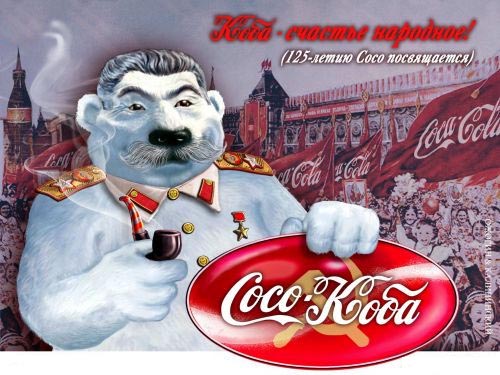
Stalin in a Coca-Coba's ad campaign!
("Coba" was his revolutionary nickname)


Political Commentary: "Flags of Our Fathers" -

Playstation


(image credit: Herman Churba)


Stop Smoking poster

London-based photographer Mark Obstfeld shares with us his experience of taking James Bond's latest supercar for a spin.


(images credit: creamstudios)


(images credit: creamstudios)


READ MORE
(image credit: adsoftheworld)


Dec 5, 2008

Links

Usability

A List Apart - Usability Articles

Usability.gov - Great resources and research-based design guidelines from the National Cancer Institute

UsabilityNet - A resource collection, with emphasis on methods, making the case for usability and business issues

Usable Web - an indexed collection maintained by Keith Instone

Web Style Guide - Practical guide to usability implementation

Usability News.com - news and articles from the British HCI group

WebWord - articles and commentary

UseIt - Jakob Nielsen's site with articles and commentary

Information Design - compilations of good articles in the field, by date and category.

GUUUI - The Interactions Designers Coffee Break with daily postings and quarterly articles

Web Design References - University of Minnesota Duluth's reference portal

Oxford Internet Institute

Journal of Interactive Advertising

Website Optimizer (beta) - AdWords - Google
Website Optimizer, Google's free multivariate testing application, helps online marketers increase visitor conversion rates and overall visitor satisfaction ...


Blogs

Boxes and Arrows

Happy Cog

Web Designer Wall

Smashing Magazine

Think Vitamin

The FWA


MEDIA AND WEB-SEARCH

blogdex
CJR Daily
The Daily Planet
Daypop Top 40
DC Media Girl
Digg
The Digital Journalist
Editor & Publisher
frontline
Google Zeitgeist
I Want Media
Keith J. Kelly
Howard Kurtz
Mediabistro
The Media Drop
Off the Record
On the Media
PressThink
reddit
Romenesko
Snap
Sphere
Technorati News Talk
TV Newser
Yahoo! (Media Issues)


superbrands


living brands, blog


scheichenost


The Art Directors Club


Fipp


Diversions

Scarlatti Sonatas
Bad Writing Contest
Blackjack
Daily Crossword
Darwin Awards
Dilbert
Leno, Letterman jokes
The Onion
Poetry Daily
Postmodern Generator
Smoke-Free Carmen
Wine Lovers’ Page


Classics

Francis Fukuyama on the End of History

Amartya Sen on Democracy

Robert Kagan on
Power and Weakness


New York Review of Books, vol. 1 no. 1

The Russian Empire, 1910, in full color

Elizabeth Loftus on False Memories

Andrew Delbanco on the Death of Lit Crit

Keep computers out of classrooms

Newsweek on Threats of Global Cooling

Julian Simon, Doomslayer

Martha Nussbaum on Judith Butler

George Orwell: the English language

World’s Worst Editing Guide

The Fable of the Keys

The Snuff Film: an Urban Legend


Weblogs


Armavirumque
Larry Arnhart
Atrios
Adam Baer
Graham Beattie
Becker and Posner
Two Blowhards
David Bordwell
Britannica
Crooked Timber
Lawrence Solum
Chicago Boyz
The Corner
Andrew Coyne
Culture Wars
Richard Dawkins
Brad DeLong
A.C. Douglas
Epicurean Dealmaker
Amitai Etzioni
Stephen Franks
Instapundit
Marginal Revolution
Norman Geras
Lester Hunt
IWF Inkwell
Irascible Professor
Steven Johnson
Brothers Judd
Daily Kos
Brian Leiter
Little Green Footballs
Derek Lowe
Grant McCracken
Steve McIntyre
Warren Meyer
John Naughton
Gloria Origgi
Overcoming Bias
PejmanPundit
Michael Phillips
Political Animal
The Revealer
Alex Ross
Lib Samizdata
Russell Seitz
Peter Stothard
David Sucher
Talking Points Memo
Three Quarks Daily
The Valve
Volokh Conspiracy
Nigel Warburton
Will Wilkinson
James Wolcott
Wonkette
Wright & Kaus TV


Logo Design Is Important

A professional brand identity communicates your company's purpose and promises, increases your memorability and drives sales.

The Importance of a Logo and Marketing Materials

About half of all businesses fail within their first few years. One source of failure that is commonly cited by experts is sloppy or ineffective marketing. If your marketing materials do not stand out from those of your competitors, your sales will suffer.

When you start a business, you need to create the quickest possible route to business success. A logo helps to create this by contributing to your business's visibility, credibility, and memorability -- three factors that will help your business to grow and achieve success. So, while putting off your logo development may seem like a prudent idea from a cash-flow point of view, it could result in your business never getting off the ground. It can also lead to your business folding when it would otherwise succeed.

If you think that you can't afford to design a logo when starting your business, consider the outcomes -- how can you afford not to?

Your business will not look stable. It will appear to be more likely to fold or to fail. Clients will not have confidence in doing business with you. Would you do business with someone who seems to be on unstable footing and who might not be in business by the end of your project or after you have purchased an item?

You will look like a very small business. Large, successful businesses would never consider doing business without professional, originally designed marketing materials. Using materials that are not professionally designed (i.e., Microsoft or Vistaprint templates) makes your business appear even smaller and can possibly indicate that you cannot perform to or meet the standards required. Read more on Why Your Company Needs a Brand.

You will look unpolished and rough. Not having a professional "look and feel" can make it appear as though your business does not matter to you. Customers may get the impression that you do not care about the way your business presents itself, which might indicate that you would not care about the quality of your work or the way that your work reflects upon their business.

You will look unfocused. Unprofessional, uncoordinated marketing materials can make your business look "jumbled" or confused. If you have a business card with one look and feel and a Web site with another, this creates a confused -- and confusing -- look and feel for your business. This can also cause an identity crisis for a small business. When looking at your differently designed materials, potential clients may be fooled into thinking that they are looking at materials that represent different companies.

The initial lack of customers and cash flow often causes new small business owners to put off designing a logo and marketing materials professionally "until they get a few clients" or "until they get started." Unfortunately, designing their own marketing materials when they launch their businesses instead of having them professionally created will make getting those initial clients more difficult and may result in a business that will not succeed.

Many entrepreneurs choose to design their own marketing materials when they launch their businesses, especially by creating their first business card. Or sometimes they will have an amateur designer, friend, or relative create the design. There are several reasons why this is not the best idea. How Much Does a Brand Cost? An amateur logo design and business card can make your business more likely to fail for a number of reasons.

A small business should look at 4 things: Who You Are, What You Do, What Makes You Different, and Who You Can Best Help.

But, how do you define your brand? And then design eye-catching materials that will make you stand out?

I'll get you on the path to creating a brand that will help you figure out what you want your business's brand to say to your target audience, so that you can stand out.

Branding Basics 5 steps:

1. Define Who You Are, What You Do, What Makes You Different, Your Target Audience and Your Business's Personality
2. Design Your Logo and Brand Identity To Communicate Your Brand Definition
3. Develop Your Website and Marketing Communications Collateral
4. Distinguish Your Business from the Crowd
5. Direct Your New Brand So That it Can Reach Its Fullest Potential

If you address all 5 of these steps when you create your Brand Identity and marketing designs, you'll create a professional brand for your business that will make it easy for you to build credibility for your small business. A professional brand identity communicates your company's purpose and promises, increases your memorability and drives sales.